739+ real-world cases
Sourced from NHTSA complaints · Reddit · Technical Service Bulletins
This fault is frequently misdiagnosed as a wheel balance issue. Multiple rebalancing attempts that fail to resolve the vibration are a strong indicator that bushing fatigue is the actual cause.
With 739+ community-reported cases, Control Arm Bushing Fatigue is a primary driver of steering wheel vibration on Tesla Model 3/Y — once bushing compliance drops below threshold, micro-vibrations bypass the suspension entirely and transmit directly to the cabin.
Fault Cause
When control arm bushings lose their original compliance due to rubber fatigue, they can no longer absorb the small, high-frequency vibrations generated by road texture and tire rotation. These micro-vibrations transmit directly from the suspension into the chassis and up through the steering column, producing a vibration felt in the steering wheel — most prominently at speeds above 60 mph.
Symptoms
Diagnosis Steps
1. Drive at 60–75 mph on a smooth highway and note whether the steering wheel vibrates at a consistent speed band. 2. Rule out tire imbalance first: have all four wheels rebalanced. If vibration persists afterward, suspect bushing fatigue. 3. With the vehicle raised, squeeze and flex each control arm bushing by hand to check for unusual hardness or cracks.
Confirmation Method
After confirming wheels are properly balanced, inspect the control arm bushings for hardness, cracking, or separation. A hardness-meter reading significantly above baseline, or visible cracking in the rubber, confirms fatigue failure.
NHTSA Complaint Samples(739+ total)
Source: U.S. National Highway Traffic Safety Administration (NHTSA) official complaint database
Tesla MODEL 3 · 2024 · Filed 12/12/2025
I am leasing a 2024 Tesla Model 3. The vehicle has a steering column defect that was previously acknowledged and temporarily repaired by Tesla Service. Within days, the issue returned. Tesla has now
Tesla MODEL 3 · 2024 · Filed 10/22/2025
On October 17, 2025, while Full Self-Driving (Supervised) was engaged, the vehicle made an abrupt, uncommanded steering input to the right, causing a collision with a tunnel wall. This crash appears
Tesla MODEL 3 · 2024 · Filed 10/03/2025
Travelling south on [XXX]just south of [XXX] on [XXX] at [XXX]. Climate was medium-rain. Car began to hydroplane due to regenerative breaking. Lost control and began to swerve between lanes. Complete
Community Reports
Tesla Model Y
Model y vibration lower control arm bushings. Anyone with steering vibration issues know if these cracks can contribute enough to cause vibrations at highway speeds? I had tires replaced recently/reb
Tesla Model 3 · 2022
What is wrong with my front suspension? March 2022 Model 3 SR with 65,000 miles. Are the control arms still defective on this model year? At low speed there is a squeaking noise coming from the whe
Tesla Model Y
2026 Tesla Model S Plaid lowered w/ N2itive Lowering Links and spacers N2itive lowering links set at -6 front and -6.8 rear. I wanted to keep a little of the factory rake. Installed the rear control
Replacement Parts
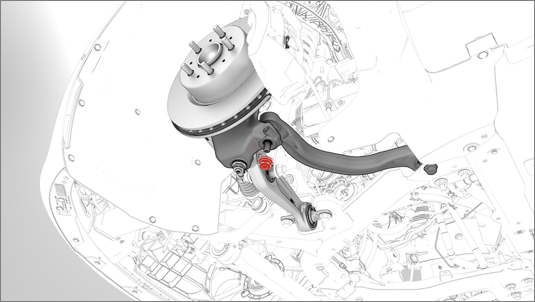
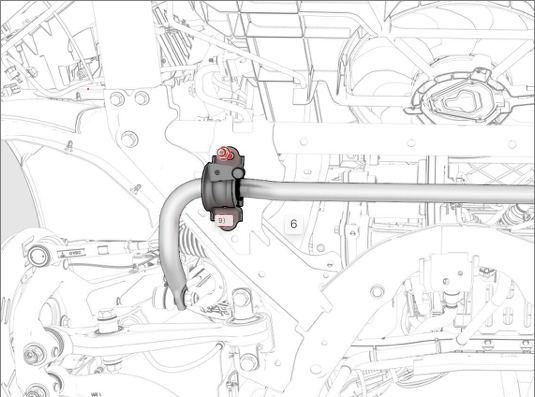
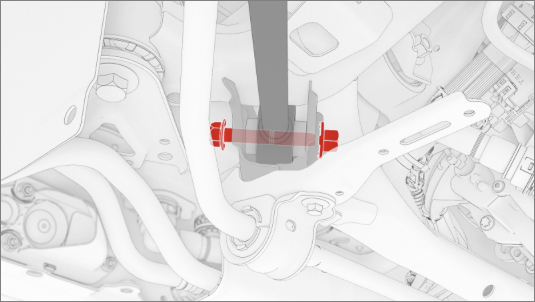
Frequently Asked Questions
Why does my Model 3/Model Y make a Fine Vibration when High speed or Above 60 mph or More noticeable when braking?
When control arm bushings lose their original compliance due to rubber fatigue, they can no longer absorb the small, high-frequency vibrations generated by road texture and tire rotation. These micro-vibrations transmit directly from the suspension into the chassis and up through the steering column, producing a vibration felt in the steering wheel — most prominently at speeds above 60 mph. Based on 739+ real-world cases in the TeslaNoiseClub database, this is one of the most commonly reported suspension noise issues on Model 3/Model Y.
How do I know if my Tesla Control Arm Bushing Fatigue needs replacement?
After confirming wheels are properly balanced, inspect the control arm bushings for hardness, cracking, or separation. A hardness-meter reading significantly above baseline, or visible cracking in the rubber, confirms fatigue failure.
Is it safe to drive my Tesla with Fine Vibration from the Steering Wheel?
This fault is frequently misdiagnosed as a wheel balance issue. Multiple rebalancing attempts that fail to resolve the vibration are a strong indicator that bushing fatigue is the actual cause.
How many Tesla owners have reported this Control Arm Bushing Fatigue issue?
TeslaNoiseClub has recorded 739+ cases of Control Arm Bushing Fatigue failure across Model 3/Model Y, sourced from NHTSA official complaints, Reddit community reports, and technical service bulletins.
Tesla steering wheel vibration at 60–70 mph — is it wheel balance or something else?
Highway-speed steering wheel vibration on Tesla Model 3 and Model Y is frequently blamed on wheel imbalance, but if rebalancing fails to solve it, control arm bushing fatigue is the more likely cause. Fatigued bushings lose their ability to absorb high-frequency road vibrations, which then transmit directly through the suspension and steering column into the wheel. The key diagnostic clue: wheel balance fixes vibration immediately after service; bushing fatigue does not respond to balancing at all.
Tesla Model Y highway vibration not fixed by wheel balancing — what else should I check?
If wheel balancing has not resolved persistent highway vibration on your Tesla Model Y, inspect the front control arm bushings. When the rubber compound inside a bushing hardens past its compliance threshold, it can no longer isolate the chassis from road texture vibrations. This produces a speed-band vibration — typically most noticeable between 60 and 75 mph — that feels identical to a balance issue but does not respond to balancing. TeslaNoiseClub records show this misdiagnosis pattern in 739+ documented cases.