739+ real-world cases
Sourced from NHTSA complaints · Reddit · Technical Service Bulletins
Repeated wheel alignments without replacing the worn bushing and ball joint is a temporary fix only. The alignment will drift again within weeks, continuing to consume tires unevenly. Address the root cause first.
Across 739+ documented cases, Lower Control Arm Bushing and Ball Joint Play is the leading cause of progressive wheel alignment drift on Tesla Model 3/Y — worn pivot points allow lateral geometry to shift, turning a minor clunk into measurable tire wear within 5,000 miles.
Fault Cause
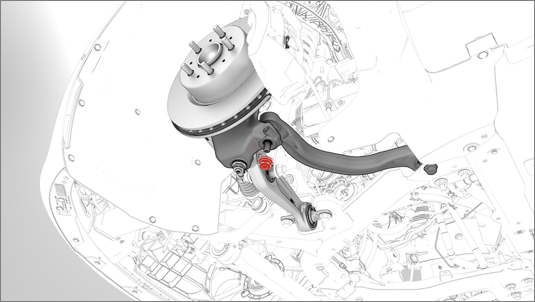
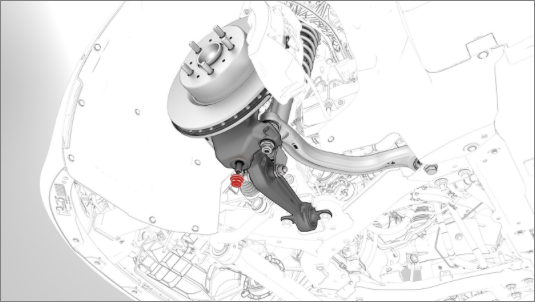
As both the lower control arm bushing and ball joint wear simultaneously, the geometric constraints that hold wheel alignment in place begin to fail. The wheel gains micro-movement at its pivot points, causing toe and camber values to drift progressively — typically noticed first as pulling to one side or abnormal inner tire wear.
Symptoms
Diagnosis Steps
1. At highway speeds, check whether the steering wheel remains centered or gradually drifts. 2. Inspect the front tires for inner-edge wear, which indicates negative camber deviation. 3. Get a four-wheel alignment check to confirm if camber and toe values are out of spec.
Confirmation Method
A four-wheel alignment printout showing camber or toe values outside Tesla's specified range, combined with rapid re-deviation after alignment, confirms the root cause is worn pivot components rather than alignment itself.
NHTSA Complaint Samples(739+ total)
Source: U.S. National Highway Traffic Safety Administration (NHTSA) official complaint database
Tesla MODEL 3 · 2024 · Filed 12/12/2025
I am leasing a 2024 Tesla Model 3. The vehicle has a steering column defect that was previously acknowledged and temporarily repaired by Tesla Service. Within days, the issue returned. Tesla has now
Tesla MODEL 3 · 2024 · Filed 10/22/2025
On October 17, 2025, while Full Self-Driving (Supervised) was engaged, the vehicle made an abrupt, uncommanded steering input to the right, causing a collision with a tunnel wall. This crash appears
Tesla MODEL 3 · 2024 · Filed 10/03/2025
Travelling south on [XXX]just south of [XXX] on [XXX] at [XXX]. Climate was medium-rain. Car began to hydroplane due to regenerative breaking. Lost control and began to swerve between lanes. Complete
Community Reports
Tesla Model Y
23 MYLR AWD both controller arms cracked Does anyone happen to know the cost to fix this? My car’s out of warranty, and Tesla informed me that the repair will be an out-of-pocket expense. Also, is
Tesla (unknown model) · 2020
Why Tesla upper control arms fail and begin to squeak every 25k miles or so. A story best told in two parts. I believe there is a new design on the control arms to allow less water on the joints now,
Tesla Model 3
Battery dead after service appointment We took our Tesla model 3 in for service 3 days ago for squeaks when turning. This was the repair:“Diagnosed and Found faulty front control arms and lateral lin
Replacement Parts
Frequently Asked Questions
Why does my Model 3/Model Y make a Vague Steering Feel when Highway cruising or Drifting during straight-line driving?
As both the lower control arm bushing and ball joint wear simultaneously, the geometric constraints that hold wheel alignment in place begin to fail. The wheel gains micro-movement at its pivot points, causing toe and camber values to drift progressively — typically noticed first as pulling to one side or abnormal inner tire wear. Based on 739+ real-world cases in the TeslaNoiseClub database, this is one of the most commonly reported suspension noise issues on Model 3/Model Y.
How do I know if my Tesla Lower Control Arm Bushing / Ball Joint Play needs replacement?
A four-wheel alignment printout showing camber or toe values outside Tesla's specified range, combined with rapid re-deviation after alignment, confirms the root cause is worn pivot components rather than alignment itself.
Is it safe to drive my Tesla with Vague Steering Feel from the Steering Wheel?
Repeated wheel alignments without replacing the worn bushing and ball joint is a temporary fix only. The alignment will drift again within weeks, continuing to consume tires unevenly. Address the root cause first.
How many Tesla owners have reported this Lower Control Arm Bushing / Ball Joint Play issue?
TeslaNoiseClub has recorded 739+ cases of Lower Control Arm Bushing / Ball Joint Play failure across Model 3/Model Y, sourced from NHTSA official complaints, Reddit community reports, and technical service bulletins.
Why does my Tesla wheel alignment keep going out of spec so quickly after being corrected?
If your Tesla Model 3 or Model Y needs realignment within weeks of a previous alignment, the root cause is almost always worn front lower control arm bushings or ball joints — not the alignment itself. These components are the mechanical anchors that hold the wheel in its correct geometric position. Once they develop play, no alignment adjustment can hold because the pivot points themselves are moving. TeslaNoiseClub has documented 739+ cases where owners cycled through multiple alignments before the worn components were identified.
Tesla Model 3 still pulling to one side after alignment — what is the real cause?
Persistent pulling after a fresh wheel alignment on Tesla Model 3 or Model Y is a strong indicator of worn lower control arm bushings or ball joints. When these pivot components have excess play, camber and toe values drift back out of spec within days or weeks of alignment. The fix is to replace the worn bushing or ball joint first, then perform alignment — not to repeat alignments indefinitely.